Article: When Does Morning Sickness Get Better? (And What Actually Helps Right Now)
When Does Morning Sickness Get Better? (And What Actually Helps Right Now)
Nobody tells you that "morning sickness" is basically a lie. It doesn't just happen in the morning. It happens at lunch. At 3pm. At midnight when you're trying desperately to sleep. And sometimes it's there from the moment you open your eyes until the moment you finally drift off — a constant, relentless wave of nausea that makes the first trimester feel like the longest weeks of your life.
If that's where you are right now, this is for you. Not the glossy version of pregnancy. The real one — the crackers-on-the-bedside-table, can't-look-at-raw-chicken, please-just-let-me-lie-down version.
You are not alone. And it does get better. Here's what's actually happening, and what genuinely helps.
Why does morning sickness happen?
The short answer: hormones. In the first trimester, your body is flooded with human chorionic gonadotropin (hCG) — the hormone that makes a pregnancy test turn positive. Levels of oestrogen and progesterone are also surging, and together these changes affect your digestive system, your sense of smell, and your tolerance for, well, basically everything.
Your sense of smell becomes extraordinarily heightened during pregnancy — it's thought to be a protective mechanism that stops you from eating things that might harm your baby. Wonderful in theory. Absolutely terrible when someone microwaves fish in the office kitchen.
Nausea is also more common with multiples (more babies = more hormones) and can run in families. So if your mum was sick as a dog in her first trimester, there's a chance you inherited that particular joy.
When does morning sickness usually stop?
For most women, the worst of it eases between weeks 12 and 16. That's not to say it disappears overnight — for many mums, it fades gradually, like a volume knob being slowly turned down. A lucky few feel better almost overnight. Others find it lingers into the second trimester, and a small percentage experience hyperemesis gravidarum — severe nausea and vomiting that requires medical care.
If your nausea is stopping you from keeping any fluids down, please talk to your midwife or GP. You deserve proper support, not just crackers and willpower.
What actually helps with pregnancy nausea
There's a lot of advice out there. Some of it is genuinely useful. Some of it will make you want to throw your phone across the room. Here's the honest version.
Eat before you get up. Keeping something plain in your stomach — a dry cracker, a piece of plain toast — before you even sit up in bed can make a real difference. An empty stomach makes nausea worse. Try keeping crackers on your bedside table the night before.
Small meals, more often. Three big meals can overwhelm a sensitive stomach. Aim for smaller amounts every two to three hours instead. Even if it's just a banana or a handful of plain rice crackers.
Stay hydrated, little and often. Sipping water throughout the day is usually easier than drinking large glasses. Cold water, ice chips, or coconut water can sometimes feel more manageable than room-temperature drinks.
Ginger. There's actually decent evidence behind ginger for nausea relief. Ginger tea, ginger biscuits, ginger chews — whatever form works for you. It won't work for everyone, but it's worth trying.
Acupressure wristbands. Designed for motion sickness, these press on the P6 point on your inner wrist. Some women swear by them. They're inexpensive and perfectly safe to use during pregnancy.
Your sense of smell is your enemy right now — work with it. Identify your triggers (coffee, perfume, that particular cleaning product) and avoid them where you can. Keeping windows open, asking your partner to handle cooking, and switching to unscented products can all help.
How scent can also be your ally
This might sound counterintuitive when strong smells are making you queasy — but certain gentle, natural scents can actually help settle nausea. Peppermint and lemon are two that many pregnant women find calming for their stomach.
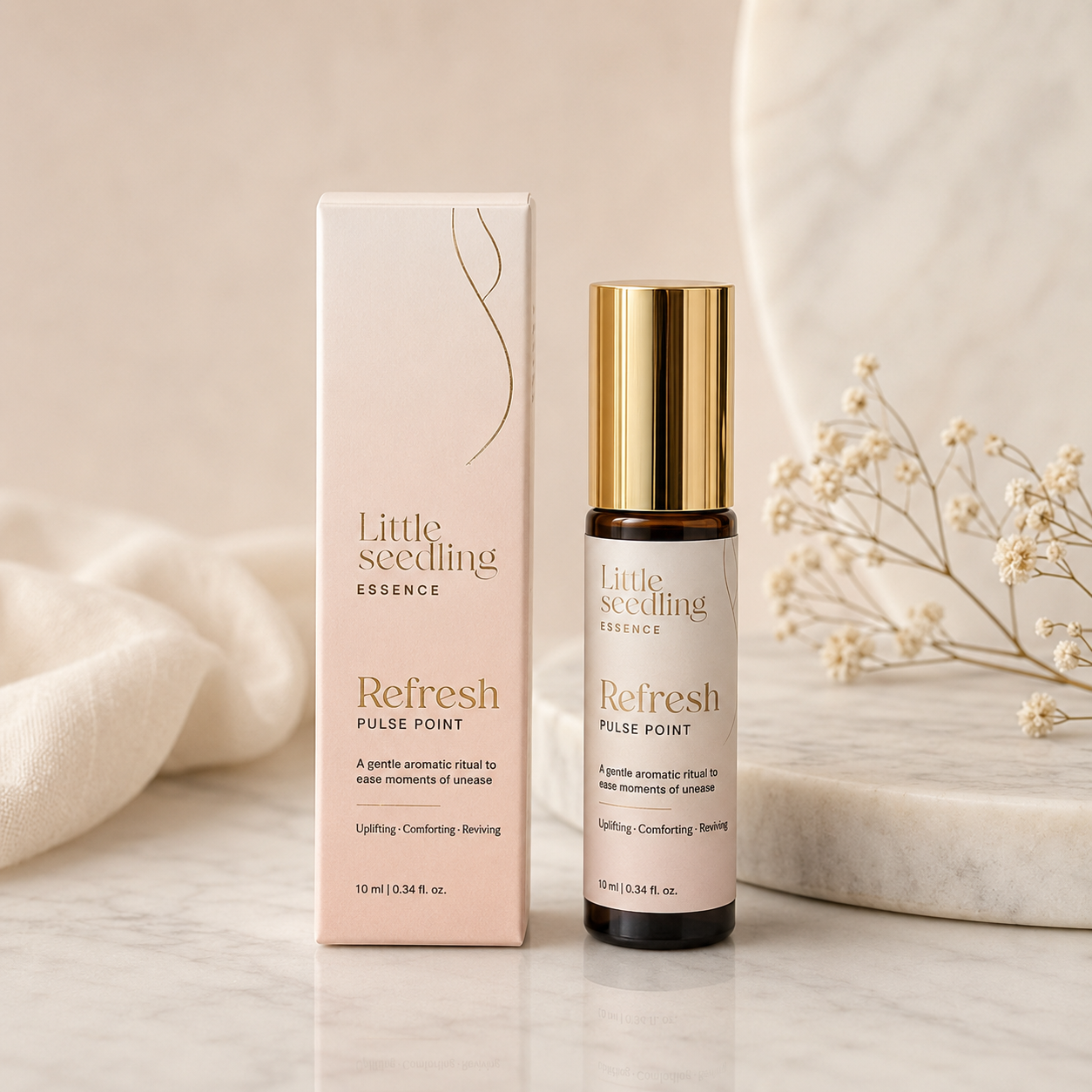
Our REFRESH Pulse Point Roller ($29.95) is a natural essential oil roller designed to be applied to your wrists, temples, or behind your ears — right on the pulse points where you'll feel its gentle effect most. It's pregnancy-safe and easy to carry in your bag for those moments when nausea strikes out of nowhere (which, let's be honest, is all the time). A few mums have told us it's become their first-trimester lifeline. Just having it in your hand feels like doing something — and sometimes that's everything.
What doesn't help (even though people will suggest it)
Just in case you need permission to ignore some well-meaning advice:
- "Have you tried eating more vegetables?" — Probably not helpful right now.
- "You just need to push through it." — You don't.
- "I was never sick and I had four kids." — Good for them.
Everyone's experience is different. There's no right way to handle the first trimester, and you're doing brilliantly even if some days all you managed was lying on the couch watching television and eating plain pasta.
Practical tips for surviving morning sickness
- Keep dry crackers or plain rice cakes on your bedside table and eat a few before getting up.
- Eat small amounts every 2–3 hours — an empty stomach makes nausea significantly worse.
- Sip cold water or ice chips throughout the day rather than large glasses.
- Try ginger tea, ginger chews, or ginger biscuits for gentle nausea relief.
- Wear acupressure wristbands, especially during commutes or triggering situations.
- Identify your smell triggers and reduce exposure where possible.
- Try a pregnancy-safe pulse point roller with calming natural essential oils.
- Rest whenever you can — fatigue makes nausea significantly worse.
- Tell your midwife or GP if you can't keep fluids down — that's beyond typical morning sickness and deserves proper care.
Frequently asked questions about morning sickness
Is it normal to have morning sickness all day, not just in the morning?
Completely normal. Despite the name, pregnancy nausea can strike at any time of day or night. "Morning sickness" is just the name it got stuck with — most pregnant women experience it across the full day, particularly in the first trimester.
When should I be concerned about morning sickness?
If you're unable to keep any food or fluids down for 24 hours or more, are losing weight, or feel very unwell, please contact your midwife or GP. This could be hyperemesis gravidarum, which requires medical support. You don't need to white-knuckle through it.
Can morning sickness harm my baby?
Mild to moderate morning sickness is not harmful to your baby. If you're seriously concerned about your nausea or its impact on nutrition, speak with your midwife or GP for personalised guidance.
Does morning sickness mean I'm having a girl?
This is a popular old wives' tale. The truth is that morning sickness severity doesn't reliably predict the sex of your baby. It's a fun topic for speculation, but don't put money on it.
Are essential oil rollers safe during pregnancy?
Many essential oils are safe to use during pregnancy, particularly when applied to skin in diluted form. Our REFRESH Pulse Point Roller is specifically formulated to be pregnancy-safe. As always, we recommend checking with your midwife or GP if you have any questions about what's right for you personally.
Made with love for mums in Australia. Little Seedling Essence — Pregnancy Safe Skincare, Made in Byron Bay.
Explore the full Essence Collection or shop the REFRESH Pulse Point Roller — your first trimester companion.

Leave a comment
This site is protected by hCaptcha and the hCaptcha Privacy Policy and Terms of Service apply.