Swollen Feet During Pregnancy and Postpartum: Why It Happens and What Actually Helps
If there's one pregnancy and postpartum complaint that comes up again and again, in every mum's group, every Reddit thread, every midwife appointment, it's swollen feet and ankles.
"My feet are so swollen I can't fit into any of my shoes."
"Is it normal for the swelling to get worse after giving birth?"
"My ankles look like I've grown a second pair."
You're not imagining it. And you're definitely not alone. Oedema (fluid retention) affects the majority of pregnant and postpartum women, and while it's rarely dangerous, it can be genuinely uncomfortable and distressing. Here's everything you need to know, and more importantly, what actually helps.
Why do your feet swell during pregnancy?
Swelling during pregnancy is caused by a combination of factors that are all completely normal parts of growing a human being.
Increased blood volume. Your body produces around 50% more blood and bodily fluids during pregnancy to support your baby's development. This extra fluid accumulates in tissues, particularly in your feet, ankles and hands.
Pressure from the growing uterus. As your uterus grows, it puts increasing pressure on the pelvic veins and the vena cava, the large vein that carries blood from your legs back to your heart. This slows the return of blood from your legs, causing fluid to pool in your feet and ankles.
Hormonal changes. The hormone progesterone causes your blood vessels to relax and widen, which can contribute to fluid leaking into surrounding tissues.
Swelling is most common in the third trimester, tends to worsen as the day goes on (especially if you've been on your feet), and is typically worse in warm weather. Which makes Australian summers particularly challenging for pregnant women.
Why can swelling get worse after birth?
This surprises many new mums. You've had the baby, so why are your feet more swollen than ever?
This is extremely common, and it has a few causes.
If you had an IV drip during labour (common with epidurals or inductions), your body received a significant amount of additional fluid that now needs to be processed and eliminated. This can cause quite dramatic swelling in the first few days postpartum.
After birth, oestrogen and progesterone levels drop rapidly, which temporarily affects how your body manages fluid retention. If you had a caesarean, your body is also managing surgical inflammation on top of the normal postpartum fluid redistribution.
The reassuring news: postpartum swelling typically peaks around days 3 to 5 and then begins to resolve as your body eliminates excess fluid. You may notice increased sweating and urination in the first week. That's your body doing exactly what it should.
When should you be concerned?
Mild to moderate swelling in the feet, ankles and hands is normal. Contact your midwife, GP or hospital immediately if you notice sudden or severe swelling, especially in your face or hands; swelling accompanied by a severe headache, visual disturbances or upper abdominal pain (these can be signs of pre-eclampsia); swelling in only one leg, or one leg that is red, hot or painful (possible sign of DVT); or swelling that doesn't improve at all in the postpartum period.
When in doubt, always check with your healthcare provider. Trust your instincts.
Natural ways to relieve pregnancy and postpartum swelling
Elevate your feet
The simplest and most effective thing you can do. Lie down and prop your feet above the level of your heart for 20 to 30 minutes. Gravity does the work. Even putting a pillow under your feet while you sleep makes a difference.
Stay well hydrated
It sounds counterintuitive, but drinking more water actually helps your body release retained fluid. When you're dehydrated, your body holds onto water as a protective response. Aim for 8 to 10 glasses a day.
Move gently and often
Long periods of sitting or standing allow fluid to pool. Gentle walking, swimming or even simple ankle circles help keep blood and fluid circulating. Getting up every hour for a short walk makes a real difference.
Avoid tight footwear
Anything that constricts blood flow in your legs will make swelling worse. If your usual shoes are too tight right now, comfortable slides are your best friend.
Sleep on your left side
Sleeping on your left side takes pressure off the vena cava and improves blood flow from your legs back to your heart, which can reduce overnight swelling.
Try a magnesium foot soak
This is where things get genuinely lovely.
Magnesium is involved in over 300 biochemical reactions in the body, including muscle relaxation, circulation support and fluid balance. Many pregnant and postpartum women are deficient in magnesium as demands on the body increase through pregnancy.
A warm magnesium foot soak offers relief in multiple ways. The warmth encourages circulation, the magnesium may be absorbed transdermally (through the skin), and the act of sitting quietly with your feet soaking for 20 minutes is itself deeply restorative. If you can make it a daily evening ritual, you'll feel the difference within a few days.
Designed for exactly this moment
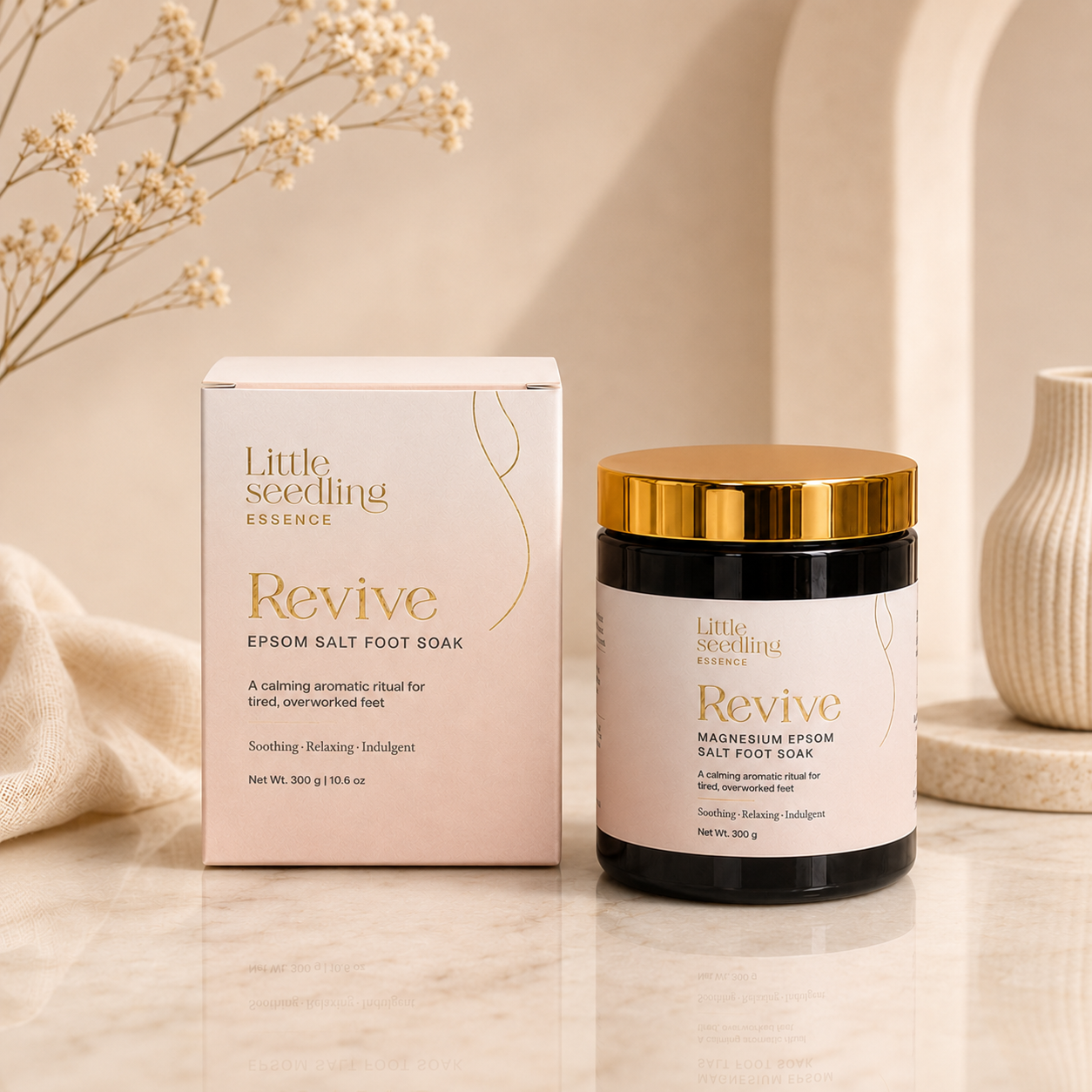
REVIVE Magnesium Epsom Salt Foot Soak was created for the exhausted, swollen-footed, growing-a-human or just-had-a-baby version of you who deserves something that feels as good as it works.
Simply dissolve in warm water, sink your feet in, and let the combination of magnesium and warmth do its thing. Safe during pregnancy and postpartum. A ritual you'll look forward to.
Magnesium Epsom salts for tired, swollen feet. Soothes, relaxes and restores. Safe during pregnancy and postpartum.
A simple evening routine for swollen feet
- Fill a basin with warm (not hot) water. Very hot water isn't recommended during pregnancy. Warm is perfect.
- Add a generous scoop of REVIVE and let it dissolve.
- Soak for 20 minutes. Put on a podcast, close your eyes, just breathe.
- Pat feet dry and elevate. Lie down with your feet up while the magnesium continues to work.
- Finish with a gentle foot massage. Even five minutes of self-massage helps stimulate lymphatic drainage and makes a meaningful difference.
A note on self-care in the fourth trimester
The postpartum period is relentless. You're healing, feeding, not sleeping, and meeting the enormous demands of a newborn, often while managing a body that feels unfamiliar and uncomfortable.
Swollen feet are a small thing in the grand scheme of it. But the act of sitting down for twenty minutes and doing something just for you matters enormously. It's a reminder that you are not just a vessel for someone else's needs. You are a person who deserves care too.
At Little Seedling, that's what we're here for. Not just products. Rituals that remind you of that.
Frequently asked questions
Is it normal to have more swelling after giving birth than during pregnancy?
Yes. This is very common, especially in the first 3 to 5 days postpartum. IV fluids from labour, hormonal shifts and post-birth inflammation all contribute. Swelling typically begins to resolve as your body eliminates excess fluid through increased urination and sweating in the first 1 to 2 weeks.
Is a magnesium foot soak safe during pregnancy?
Yes. A warm magnesium Epsom salt foot soak is safe during pregnancy. REVIVE by Little Seedling Essence is specifically formulated to be pregnancy and postpartum safe.
How long should I soak my feet to help with swelling?
Aim for 15 to 20 minutes in warm water. This gives the magnesium time to work and the warmth time to help circulation.
When should I see a doctor about swollen feet during pregnancy?
Seek immediate medical attention if swelling is sudden and severe, if it comes with a headache and vision changes (signs of pre-eclampsia), or if only one leg is swollen, red or painful (possible DVT).
Does drinking more water actually help with pregnancy swelling?
Counterintuitively, yes. Staying well-hydrated helps your kidneys flush excess fluid rather than holding onto it as a protective response.
Made with love for mums in Australia. Little Seedling Essence — Pregnancy Safe Skincare, Made in Byron Bay.
Give your feet the rest they deserve
REVIVE Magnesium Foot Soak is safe during pregnancy and postpartum. Twenty minutes in warm water can make a world of difference when your body is working this hard.
Shop REVIVE Magnesium Foot Soak →View the full Essence Collection · Free shipping to Australia on qualifying orders.

Leave a comment
This site is protected by hCaptcha and the hCaptcha Privacy Policy and Terms of Service apply.